
Can AI and Automated Analytics Replace Commissioning?
Automated analytics can expand observation and accelerate diagnosis, but trustworthy results still depend on correct sensors, metadata, sequences, context, and verified corrective action.
AI, fault detection, digital twins, and automated commissioning are valuable tools when their inputs and limits are understood. They do not replace the field evidence, professional judgment, accountability, and physical verification at the center of commissioning.
Technical overview
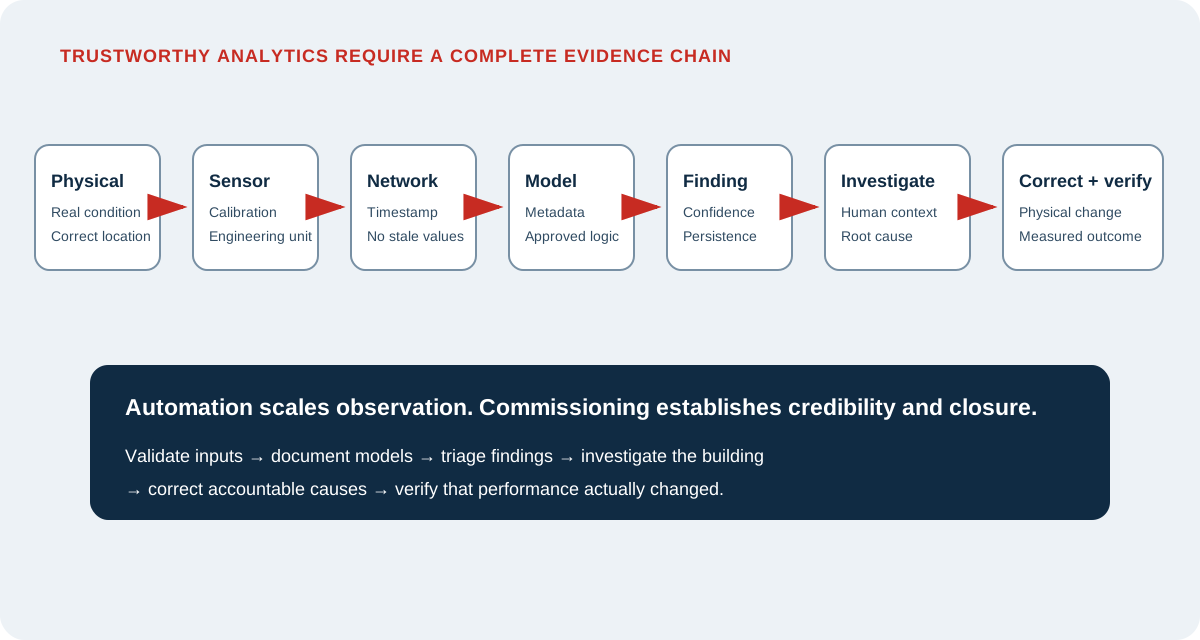
AI, Analytics, and Cx: field logic map
Automation changes the reach of commissioning
A commissioning team can observe only a limited number of conditions during a site visit. BAS trends, fault-detection and diagnostic platforms, digital models, and AI-supported analysis can evaluate more points over longer periods and identify patterns that would otherwise be missed. NIST is actively studying AI-enabled building systems and automated commissioning techniques tied to high-performance sequences.
That capability should expand commissioning rather than erase its foundations. Software sees the values and relationships made available to it. It may not know that a sensor is in the wrong duct, a valve linkage is slipping, equipment tags are reversed, an override is undocumented, or the approved sequence differs from the programmed logic.
Trust begins with data provenance
Before relying on an analytic result, identify where each value originates, its engineering unit, timestamp, sampling interval, calibration basis, operating context, and transformations. Confirm that point names and equipment relationships reflect the installed system. Missing or silently substituted values should be visible.
Trend compression, asynchronous sampling, changed point names, daylight-saving transitions, gateway scaling, stale values, and cloud outages can distort conclusions. A data-quality screen should precede performance diagnosis and should remain part of ongoing monitoring.
Models and rules require an approved operating truth
Rule-based analytics compare observed behavior with encoded expectations. Machine-learning methods infer relationships from examples. Both require context: equipment type, served zones, schedules, weather, load, control modes, setpoints, design intent, and acceptable exceptions. Training on defective operation can normalize a fault.
Use the approved sequence and current facility requirements as the operational truth, then document where the analytic model simplifies them. Version the rules and models so that changes can be reviewed and results remain reproducible.
A finding is not a corrected condition
Analytics may flag simultaneous heating and cooling, unstable loops, leaking valves, abnormal energy, sensor drift, or schedule exceptions. A qualified person must investigate the physical and control causes, assess operational risk, coordinate corrective work, and verify the outcome. Repeated alarms without accountable response create noise rather than performance.
The issue workflow should link detection, supporting data, field observation, responsible party, corrective action, retest, and estimated or measured impact. Closing a software ticket should require evidence that the building condition changed.
Use humans and automation for what each does best
Automation is strong at persistence, pattern recognition, comparison, prioritization, and rapid review of large datasets. Commissioning professionals contribute requirement interpretation, field context, measurement judgment, risk management, interdisciplinary coordination, and acceptance accountability.
A practical hybrid approach validates a representative set of sensors and sequences in the field, establishes trustworthy data and models, automates repeatable checks, triages findings, verifies corrections physically where needed, and periodically revalidates the analytics as the building changes.
Field application
A practical review checklist
- 01
Define the operational questions and approved sequence before selecting analytic rules.
- 02
Inventory source points, units, timestamps, sampling, transformations, and missing-data behavior.
- 03
Validate representative sensor locations, calibration, commands, feedback, and equipment relationships.
- 04
Check metadata, naming, schedules, modes, setpoints, and model version control.
- 05
Establish severity, persistence, and confidence criteria that support useful prioritization.
- 06
Assign accountable investigation and correction rather than accumulating unowned alarms.
- 07
Verify corrected physical performance and document false positives or model limitations.
- 08
Revalidate analytics after renovations, sequence changes, controls upgrades, or sensor replacement.
Authoritative orientation
References and further reading
Use the current adopted or licensed edition applicable to the project. These links provide public orientation and do not reproduce protected standards.
Continue exploring
One article. 235 free engineering calculators.
Move from the concept to a transparent calculation, or return to the complete Insights collection.