
The Controls Turnover Package an Owner Should Require
A BAS cannot be operated, maintained, recovered, or competitively serviced without complete final programs, databases, graphics, records, credentials, and training.
Controls turnover should deliver the authoritative information needed to understand the installed system, recover it after failure, modify it responsibly, and sustain performance without permanent dependence on unwritten contractor knowledge.
Technical overview
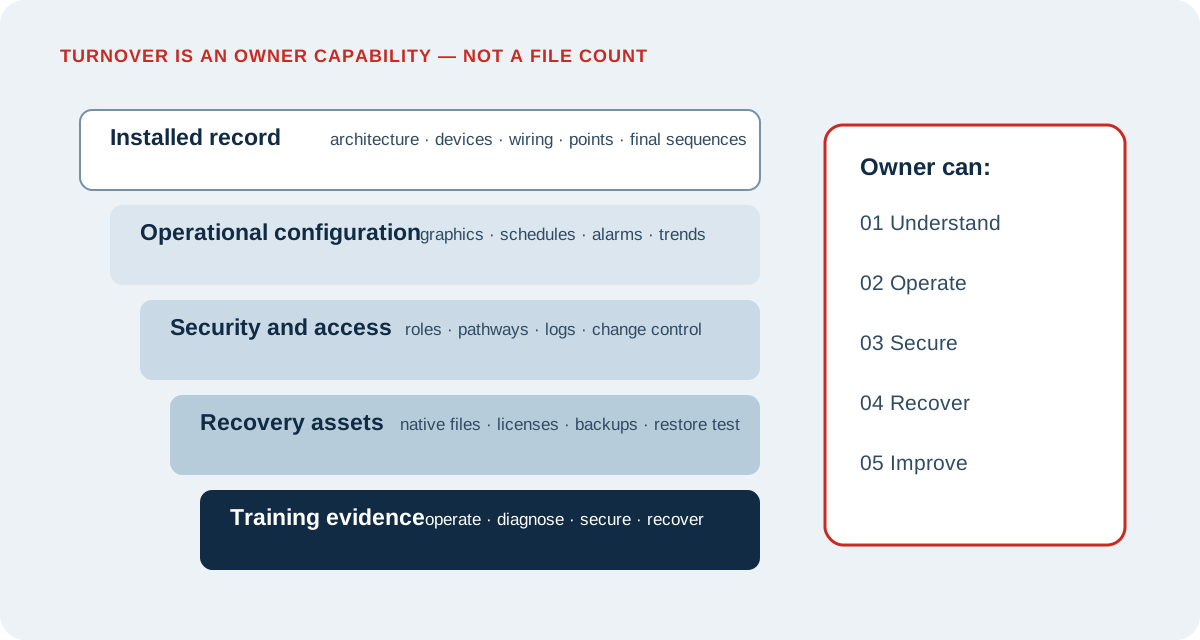
Controls Turnover Package: field logic map
The owner needs the installed truth
Approved submittals describe what the project intended to install. Turnover must describe what was actually installed and programmed. If device addresses, point names, sequences, graphics, network connections, setpoints, or software versions changed during construction, the final package must capture those changes.
A polished PDF is not sufficient when the owner needs native databases, controller programs, editable graphics, exports, licenses, certificates, and vendor tools to recover or modify the system. The required formats and ownership rights should be established in the contract rather than negotiated at closeout.
Organize turnover by operational task
A useful package lets an operator answer practical questions: What serves this space? Which controller owns this point? What should happen in this mode? Why did this alarm occur? What changed last week? How do we restore the system? Who is authorized to connect remotely? Organize the material around those tasks and use consistent equipment identifiers.
The structure should distinguish approved design documents, final record documents, live configuration exports, test evidence, open issues, maintenance information, and superseded files. A concise index should identify the authoritative file, date, system, software version, and required application for each deliverable.
Require the complete controls record
The final record normally includes network architecture, panels and controller schedules, device and point inventories, addressing, wiring and termination drawings, sequences, control diagrams, setpoints, schedules, alarms, trends, user roles, integration mappings, graphics, software and firmware versions, licenses, backups, restoration procedures, and configuration-change history.
Include unresolved limitations, proprietary dependencies, recurring service requirements, cybersecurity responsibilities, cloud subscriptions, warranty contacts, and the dates when support or certificates expire. Sensitive credentials should be transferred securely and separately from general project records.
Validate the package before accepting it
Open representative files, confirm that links and exports work, compare point counts with the installed inventory, and reconcile record drawings with actual panels and networks. Search for draft marks, obsolete device names, missing graphics, generic sequences, undocumented overrides, disabled alarms, and trend histories that do not survive a restart.
Most importantly, demonstrate recovery. A risk-appropriate exercise should show that designated owner personnel can locate the correct backup, use the required software, restore a test or spare device, and verify the result. Discovery that a license, password, cable, or obsolete laptop is missing should occur before final payment.
Training should use the final system and final records
Training should occur after major corrections are complete and should use the installed graphics, alarms, schedules, trends, and sequences. Record sessions and provide task-based exercises: changing a schedule, acknowledging an alarm, reviewing a trend, identifying an override, exporting data, adding a user, making a backup, and escalating a problem.
Turnover succeeds when the owner can operate independently, preserve the approved sequence, control access, and recover from failure. Commissioning should verify that outcome rather than count files alone.
Field application
A practical review checklist
- 01
Create a turnover index with authoritative file names, dates, systems, formats, and required software.
- 02
Reconcile device, panel, point, integration, and network inventories with the installed system.
- 03
Deliver final native programs, databases, graphics, sequences, exports, licenses, and backups.
- 04
Document schedules, setpoints, alarms, trends, overrides, user roles, and remote-access pathways.
- 05
Separate sensitive credentials and keys from broadly distributed project documents.
- 06
Open representative files and verify that owner personnel can use them.
- 07
Demonstrate a controlled backup restoration or equivalent recovery exercise.
- 08
Complete task-based operator training using the final corrected configuration.
Authoritative orientation
References and further reading
Use the current adopted or licensed edition applicable to the project. These links provide public orientation and do not reproduce protected standards.
Continue exploring
One article. 235 free engineering calculators.
Move from the concept to a transparent calculation, or return to the complete Insights collection.