
The SVE Group Evidence Matrix: From Design Intent to Demonstrated Performance
A traceable evidence matrix connects owner requirements, design sequences, installed points, functional tests, trends, deficiencies, corrections, and final acceptance.
Commissioning records become more useful when every important requirement has an identified verification method and every result can be traced back to its source. The SVE Group Evidence Matrix provides that connective structure without replacing the detailed documents.
Technical overview
The SVE Group Evidence Matrix: field logic map
Commissioning produces many records but needs one connective map
Owner requirements, basis-of-design narratives, drawings, schedules, submittals, sequences, point lists, startup forms, TAB reports, functional tests, trends, issues, training records, and systems manuals all contain parts of the performance story. Without traceability, a project can produce thousands of pages while leaving a critical requirement unverified.
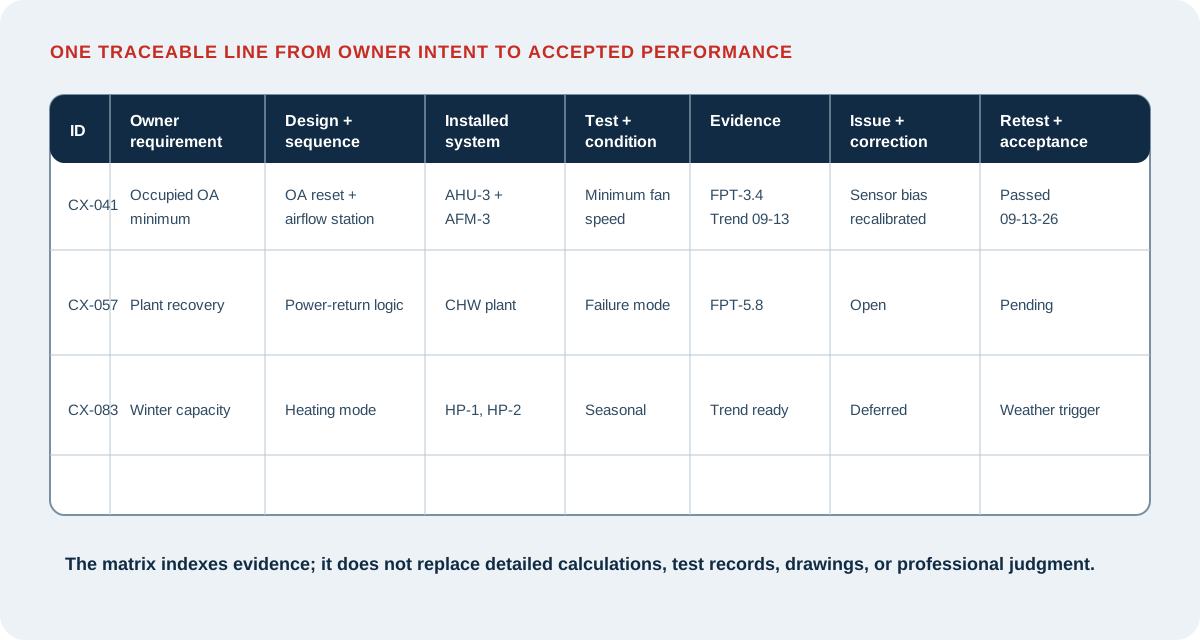
The SVE Group Evidence Matrix creates a row for each material requirement or operating outcome and connects it to the approved source, responsible system, verification method, evidence location, result, deficiency, correction, retest, and final disposition. It is an index to evidence—not a replacement for engineering documents or test records.
Begin with measurable outcomes
Requirements should describe what the owner needs the completed facility to accomplish: environmental conditions, ventilation, pressure relationships, capacity, redundancy, energy behavior, schedules, alarms, recovery, maintainability, documentation, or training. Where feasible, define the condition and acceptance criterion before construction testing.
Some outcomes are quantitative; others require observation, document review, interview, or demonstration. The matrix should preserve that distinction. Forcing every requirement into a single numerical tolerance can misrepresent professional judgment and project risk.
Connect design, installation, and controls implementation
For each outcome, identify the systems, equipment, sensors, actuators, software points, sequences, interlocks, and documents needed to produce it. This exposes missing points, conflicting sequences, unavailable measurements, and acceptance criteria that cannot be tested as written.
Update the matrix through submittal review and construction. If equipment, logic, or requirements change, preserve the approved decision and revise the downstream tests. Traceability prevents the final test from proving an obsolete design condition.
Tie every acceptance decision to evidence
A final status should link to the exact startup record, TAB page, test step, trend file, photograph, calculation, issue, correction, and retest that support it. Record the date, observed condition, instrument or data source, responsible witness, and material limitation. The owner can then distinguish demonstrated, partially demonstrated, deferred, failed, and accepted-with-risk outcomes.
When evidence conflicts, preserve the conflict until it is reconciled. A BAS value, TAB measurement, handheld instrument, and manufacturer reading may represent different locations, times, units, or operating states. The matrix makes those differences visible rather than averaging away the uncertainty.
Carry the matrix into operation
At turnover, the matrix becomes a roadmap to the systems manual and future recommissioning. Operators can see what was tested, under which conditions, what remains seasonal, which setpoints and trends matter, and where the authoritative records reside.
During later renovations or performance investigations, update the affected rows and preserve the history. This creates a durable thread from owner intent to current facility requirements and prevents institutional knowledge from depending on one person’s memory.
Field application
A practical review checklist
- 01
Assign a unique identifier to each material owner requirement and operating outcome.
- 02
Link the requirement to its approved source, design response, sequence, points, and responsible system.
- 03
Define the verification method, condition, evidence type, and acceptance criterion.
- 04
Update dependencies when submittals, equipment, sequences, or owner requirements change.
- 05
Link actual test records, trends, calculations, observations, and limitations.
- 06
Track deficiencies, corrective actions, retests, and accepted residual risk without overwriting history.
- 07
Identify deferred and seasonal evidence with triggers, owners, and deadlines.
- 08
Deliver the final matrix as an index into the systems manual and future recommissioning plan.
Related Free tools
Put the relationships to work.
Authoritative orientation
References and further reading
Use the current adopted or licensed edition applicable to the project. These links provide public orientation and do not reproduce protected standards.
Continue exploring
One article. 235 free engineering calculators.
Move from the concept to a transparent calculation, or return to the complete Insights collection.